|
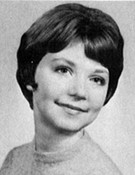
Judith Sheahan (Lindgren)
Hello All of You Septuagenarians!
Yep...we turn 70 this year, or it has already happened to you, so happy birthday to us! My wonderful dad sent me the article below and since it captured many of my feelings, I thought you might enjoy it too. Yes, it is long, but I think you will find it worth your time, and hey, now that we are this age, we are supposed to have more patience, right?
It would be fun to learn your reactions and perspective on this special birthday. Do you agree with Epstein who wrote this piece in 2007, and do you feel as surprised as I to be turning...gulp...70?
Judi (Sheahan) Lindgren...still 8 months away from hitting that milestone!
Kid Turns 70 And nobody cares. by Joseph Epstein 01/29/2007, The Weekly Standard, Volume 012, Issue 19
Seventy. Odd thing to happen to a five-year-old boy who, only the other day, sang "Any Bonds Today," whose mother's friends said he would be a heartbreaker for sure (he wasn't), who was popular but otherwise undistinguished in high school, who went on to the University of Chicago but long ago forgot the dates of the rule of the Thirty Tyrants in Athens and the eight reasons for the Renaissance, who has married twice and written several books, who somewhere along the way became the grandfather of three, life is but a dream, sha-boom sha-boom, 70, me, go on, whaddya, kiddin' me?
A funny age to turn, 70, and despite misgivings I have gone ahead and done it, yet with more complex thoughts than any previous birthday has brought. Birthdays have never been particularly grand events for me; my own neither please nor alarm me. I note them chiefly with gratitude for having got through another year. I have never been in any way part of the cult of youth, delighted to be taken for younger than I am, or proud that I can do lots of physical things that men my age are no longer supposed to be able to do: 26 chinups with gila monsters biting both my ankles. I have always thought I looked--and, as mothers used to instruct, always tried to act--my age. But now, with 70 having arrived, I notice that for the first time I am beginning to fudge, to hedge, to fib slightly, about my age. In conversation, in public appearances, I described myself as "in my late 60s," hoping, I suppose, to be taken for 67. To admit to 70 is to put oneself into a different category: to seem uncomfortably close to, not to put too fine a point on it, Old Age.
At 70 middle age is definitely--and definitively--done. A wonderful per iod, middle age, so nondescript and im precise, extending perhaps from one's late 30s to one's late 60s, it allows a person to think him- or herself simultaneously still youthful, though no longer a kid. Forty-eight, 57, 61, those middle-aged numbers suggest miles to go before one sleeps, miles filled with potential accomplishments, happy turnabouts in one's destiny, midlife crises (if one's tastes run to such extravaganzas), surprises of all kinds.
Many ski lifts at Vail and Aspen, I have been told, no longer allow senior-citizen discounts at 60, now that so many people continue skiing well into their 60s. With increased longevity, it's now thought a touch disappointing if a person dies before 85. Sixty, the style sections of the newspapers inform us, is the new 40. Perhaps. But 70--70, to ring a change on the punchline of the joke about the difference between a virgin and a German Jew--70 remains 70. One can look young for 70, one can be fit for 70, but in the end there one is, 70.
W.H. Auden, who pegged out at 66, said that while praying we ought quickly to get over the begging part and get on to the gratitude part. "Let all your thinks," he wrote, "be thanks." One can either look upon life as a gift or as a burden, and I myself happen to be a gift man. I didn't ask to be born, true enough; but really, how disappointing not to have been. I had the additional good luck of arriving in 1937, in what was soon to become the most interesting country in the world and to have lived through a time of largely unrelieved prosperity in which my particular generation danced between the raindrops of wars: a child during World War II, too young for Korea, too old for Vietnam, but old enough for the draft, which sent me for 22 months (useful as they now in retrospect seem) off to Missouri, Texas, and Arkansas. My thinks really are chiefly thanks.
As for my decay, what the French call my décomposition géneralé, it proceeds roughly on schedule, yet for the moment at a less than alarming rate. I have had a heart bypass operation. Five or so years ago, I was found to have auto-immune hepatitis, which caused me no pain, and which side-effectless drugs have long since put in remission. I am paunchless, have a respectable if not abundant amount of hair atop my head (most of it now gray, some of it turning white), retain most of my teeth (with the aid of expensive dentistry). I have so far steered clear of heart attack, dodged the altogether too various menacing cancers whirling about, and missed the wretched roll of the dice known as aneurysms. (Pause while I touch wood.) My memory for unimportant things has begun to fade, with results that thus far have been no more than mildly inconvenient. (I set aside 10 minutes or so a day to find my glasses and fountain pen.)
I have not yet acquired one of those funny walks--variants of the prostate shuffle, as I think of them-- common to men in their late 60s and 70s. I am, though, due for cataract surgery. I'm beginning to find it difficult to hear women with high-pitched voices, especially in restaurants and other noisy places. And I take a sufficient number of pills--anti-this and supplement-that--to have made it necessary to acquire one of those plastic by-the-day-of-the-week pill sorters.
Suddenly, I find myself worrying in a way I never used to do about things out of the routine in my life: having to traverse major freeways and tollways to get to a speaking or social engagement. I take fewer chances, both as a driver and once intrepid jaywalker. I find myself sometimes stumbling over small bumps in the sidewalk, and in recent years have taken a couple of falls, where once I would do an entrechat and a simple pirouette--a Nureyev of the pavement--and move along smartly. I walk more slowly up and down stairs, gripping the railing going downstairs. I have, in sum, become more cautious, begun to feel, physically, more fragile, a bit vulnerable.
Sleep has become erratic. Someone not long ago asked me if I watched Charlie Rose, to which I replied that I am usually getting up for the first time when Charlie Rose goes on the air. I fall off to sleep readily enough, but two or three hours later I usually wake, often to invent impressively labyrinthine anxieties for myself to dwell upon for an hour or two before falling back into aesthetically unsatisfying dreams until six or so in the morning. Very little distinction in this, I have discovered by talking to contemporaries, especially men, who all seem to sleep poorly. But this little Iliad of woes is pretty much par for the course, if such a cliché metaphor may be permitted from a nongolfer. That I have arrived at 70 without ever having golfed is one of the facts of my biography to date of which I am most proud.
"Bodily decrepitude," says Yeats, "is wisdom." I seem to have accrued more of the former than the latter. Of wisdom generally, I haven't all that much to declare. I find myself more impressed by the mysteries of life and more certain that most of the interesting questions it poses have no persuasive answers, or at least none likely to arrive before I depart the planet. I haven't even settled the question of whether I believe in God. I try to act as if God exists--that is, the prospects of guilt and shame and the moral endorphins that good conduct brings still motivate me to act as decently as I'm able. I suffer, then, some of the fear of religion without any of the enjoyment of the hope it brings. I don't, meanwhile, have a clue about why there is suffering in the world, whether there is an afterlife, or how to explain acts of truly grand altruism or unprofitable evil. You live and you learn, the proverb has it; but in my case, You live and you yearn seems closer to it.
But then, I must report that at 70 even my yearnings are well down. I have no interest in acquiring power of any kind and fame beyond such as I now pathetically possess holds little interest for me. My writing has won no big prizes, nor do I expect it ever to do so. ("Tell them," the normally gentle and genteel 90-year-old William Maxwell said to Alec Wilkinson and another friend on the day before his death, "their f--ing honors mean nothing to me.") I am ready to settle for being known as a good writer by thoughtful people.
I would like to have enough money so that I don't have to worry, or even think, about money, but it begins to look as if I shan't achieve this, either. Rousseau spoke of feeling himself "delivered from the anxiety of hope, certain of gradually losing the anxiety of desire . . . " I've not yet lost all my desire, and suspect that to do so probably is a sign of resigning from life. Although I'm not keen on the idea of oblivion, which seems the most likely of the prospects that await, I like to think that I have become a bit less fearful of death. One of the most efficient ways to decrease this fear, I've found, is to welcome death, at least a little, and this growing older can cause one to do--or at least it has me, sometimes.
Seventy poses the problem of how to live out one's days. To reach 70 and not recognize that one is no longer living (as if one ever were) on an unlimited temporal budget is beyond allowable stupidity. The first unanswerable question at 70 is how many days, roughly, are left in what one does best to think of as one's reprieve. Unless one is under the sentence of a terminal cancer or another wasting disease, no one can know, of course; but I like the notion of the French philosopher Alain that, no matter what age one is, one should look forward to living for another decade, but no more. My mother lived to 82 and my father to 91, so I'm playing, I suppose, with decent genetic cards. Yet I do not count on them. A year or so ago, my dentist told me that I would have to spend a few thousand dollars to replace some dental work, and I told him that I would get back to him on this once I had the results of a forthcoming physical. If I had been found to have cancer, I thought, at least I could let the dentistry, even the flossing, go. Turning 70 one has such thoughts.
At 70 one encounters the standard physical diminutions. I am less than certain how old I actually look, but in a checkout line, I can now say to a young woman, "You have beautiful eyes," without her thinking I'm hitting on her. If my dashing youthful looks are gone, my intellectual and cultural stamina are also beginning to deplete. I have lost most of my interest in travel, and feel, as did Philip Larkin, that I should very much like to visit China, but only on the condition that I could return home that night.
Another diminution I begin to notice is in the realm of tact. I have less of it. I feel readier than ever before to express my perturbation, impatience, boredom. Why, with less time remaining, hold back? "I wonder," I find myself wanting to say to a fairly large number of people, "if you haven't greatly overestimated your charm?" Perhaps, though, I do better to hold off on this until I reach 80, as I hope to be able to do; it will give me something to live for.
A younger friend in California writes to me that, in a restaurant in Bel Air, Robin Williams, Emma Thompson, and Pete Townsend (of The Who, he is courteous enough to explain) walked by his table. I write back to tell him that I would have been much more impressed if Fred Astaire, Ingrid Bergman, and Igor Stravinsky had done so. My longing to meet Robin Williams, Emma Thompson, and Pete Townsend is roughly the same, I should guess, as their longing to meet me.
I don't much mind being mildly out of it, just as I don't finally mind growing older. George Santayana, perhaps the most detached man the world has known outside of certain Trappist monasteries, claimed to prefer old age to all others. "I heartily agree that old age is, or may be as in my case, far happier than youth," he wrote to his contemporary William Lyon Phelps. "I was never more entertained or less troubled than I am now." Something to this, if one isn't filled with regret for the years that have gone before, and I am not, having had a very lucky run thus far in my life. At 70 it is natural to begin to view the world from the sidelines, a glass of wine in hand, watching younger people do the dances of ambition, competition, lust, and the rest of it.
Schopenhauer holds that the chief element in old age is disillusionment. According to this dourest of all philosophers, at 70 we have, if we are at all sentient, realized "that there is very little behind most of the things desired and most of the pleasures hoped for; and we have gradually gained an insight into the great poverty and hollowness of our whole existence. Only when we are seventy do we thoroughly understand the first verse of Ecclesiastes." And yet, even for those of us who like to think ourselves close to illusionless, happiness keeps breaking through, fresh illusions arrive to replace defunct ones, and the game goes on.
If the game is to be decently played, at 70 one must harken back as little as possible to the (inevitably golden) days of one's youth, no matter how truly golden they may seem. The temptation to do so, and with some regularity, sets in sometime in one's 60s. As a first symptom, one discovers the word "nowadays" turning up in lots of one's sentences, always with the assumption that nowadays are vastly inferior to thenadays, when one was young and the world green and beautiful. Ah, thenadays--so close to "them were the days"--when there was no crime, divorce was unheard of, people knew how to spell, everyone had good handwriting, propriety and decorum ruled, and so on and on into the long boring night of nostalgia.
Start talking about thenadays and one soon finds one's intellectual motor has shifted into full crank, with everything about nowadays dreary, third-rate, and decline-and-fallish. A big mistake. The reason old people think that the world is going to hell, Santayana says, is they believe that, without them in it, which will soon enough be the case, how good really can it be?
Seventy brings prominently to the fore the question of Big D, and I don't mean Dallas. From 70 on, one's death can no longer be viewed as a surprise; a disappointment, yes, but not a surprise. Three score and ten, after all, is the number of years of life set out in the Bible; anything beyond that is, or ought to be, considered gravy, which is likely to be high in cholesterol, so be careful. Henry James, on his deathbed, in a delirium, said of death, "So here it is at last, the distinguished thing." Wonder why? Few things are less distinguished than death, that most democratic of events and oldest of jokes that comes to each of us afresh.
At 70 one more clearly than ever before hears footsteps, as they say wide-receivers in the NFL do who are about to be smashed by oncoming pass-defenders while awaiting the arrival of a pass thrown to them in the middle of the field. The footsteps first show up in the obituary pages, which I consult with greater interest than any other section of the newspaper. Not too many days pass when someone I know, or someone whom someone else I know knows, does not show up there. Late last year the anthropologist Clifford Geertz and the novelist William Styron conked out; neither was a close friend, though as fellow members of an editorial board I spent a fair amount of time with them. Then the tennis player Ham Richardson appeared on the obit page. I was a ballboy for an exhibition he and Billy Talbert put on with two members of the Mexican Davis Cup team at the Saddle & Cycle Club in the 1950s in Chicago. I was surprised to learn that Richardson was only three years older than I. I am fairly frequently surprised to discover that the newly deceased are only a little older than I.
Along with footsteps, I also hear clocks. Unlike baseball, life is a game played with a clock. At 70, a relentlessly insistent ticking is going off in the background. I have decided to read, and often reread, books I've missed or those I've loved and want to reread one more time. I recently reread War and Peace, my second reading of this greatest of all novels, and I ended it in sadness, not only because I didn't wish to part from Pierre, Natasha, Nicolai, and the others left alive at the novel's end, but because I know it is unlikely I shall return for another rereading.
I've been reading Proust's Jean Santeuil, his run-up for In Search of Lost Time, which I'd like to have time to read for a third and last time. I wonder if I shall be in the game long enough to reread Don Quixote and Herodotus and Montaigne--reread them all deeply and well, as they deserve to be read but, as always with masterworks, one suspects one failed to do the first and even second time around.
Seventy ought to concentrate the mind, as Samuel Johnson said about an appointment with the gallows on the morrow, but it doesn't--at least, it hasn't concentrated my mind. My thoughts still wander about, a good part of the time forgetting my age, lost in low-grade fantasies, walking the streets daydreaming pointlessly. (Tolstoy, in Boyhood, writes: "I am convinced that should I ever live to a ripe old age and my story keeps pace with my age, I shall daydream just as boyishly and impractically as an old man of 70 as I do now.") Despite my full awareness that time is running out, I quite cheerfully waste whole days as if I shall always have an unending supply on hand. I used to say that the minutes, hours, days, weeks, months seemed to pass at the same rate as ever, and it was only the decades that flew by. But now the days and weeks seem to flash by, too. Where once I would have been greatly disconcerted to learn that the publication of some story or essay of mine has been put off for a month or two, I no longer am: the month or two will now come around in what used to seem like a week or two.
I hope this does not suggest that, as I grow older, I am attaining anything like serenity. Although my ambition has lessened, my passions have diminished, my interests narrowed, my patience is no greater and my perspective has not noticeably widened. Only my general intellectual assurance has increased. Pascal says that under an aristocracy "it is a great advantage to have a man as far on his way at 18 or 20 years as another could be at 50; these are 30 years gained without trouble." To become the intellectual equivalent of an aristocrat in a democracy requires writing 20 or so books--and I have just completed my 19th.
Still, time, as the old newsreels had it, marches on, and the question at 70 is how, with the shot clock running, best to spend it. I am fortunate in that I am under no great financial constraints, and am able to work at what pleases me. I don't have to write to live--only to feel alive. Will my writing outlive me? I am reasonably certain that it won't, but--forgive me, Herr Schopenhauer--I keep alive the illusion that a small band of odd but immensely attractive people not yet born will find something of interest in my scribbles. The illusion, quite harmless I hope, gives me--I won't say the courage, for none is needed--but the energy to persist.
The fear of turning 70 for a writer is that he will fall too far out of step with the society that he is supposed, in essays and stories, to be chronicling. I recently wrote a book on friendship, but was I disqualified, as one or two younger reviewers politely suggested, from knowing how friendship really works among the young today? I continue to read contemporary fiction, but not with the same eagerness with which I once read the fiction written by my elders and people of my own generation. In his sixties, Edmund Wilson, describing himself as "a back-number," announced his loss of interest in much of the writing of the day. A time comes when one loses not merely interest but even curiosity about the next new thing. How intensely, at 70, must I scrutinize the work of Jack Black, Sarah Silverman, Dave Eggers, and Sacha Baron Cohen?
I have never attempted to calculate the collective age of my readers. When I am out flogging a new book, or giving a talk, the audience who come to hear me are generally quite as old as I, and some a bit older. Perhaps the young do not spend much time attending such non-events. Perhaps they feel I haven't much to say to them. I do receive a fair amount of email from younger readers--in their 20s and 30s--but many of these readers have literary aspirations of their own, and write to me seeking advice.
But the feeling of being more and more out of it begins to sink in. The news of the new movie stars, comedians, hotshot bloggers, usually comes to me a little late. My pretensions as a writer of nonfiction have been toward cultural criticism. Older men and women--Henry Kissinger, Zbigniew Brzezinski, James Baker--can stay in the foreign policy game almost unto death. But how long can a writer commenting on the culture be expected really to know the culture? In fact, there can even be something a little unseemly about writers beyond a certain age claiming to share the pleasures of the young. I recall Pauline Kael, who was 18 years older than I, once comparing a movie to "your favorite rock concert," and I thought, oh, poor baby, how embarrassing to see you whoring after youth. I much like the Internet, adore email, and probably use Google seven or eight times a day. But must I also check in on YouTube, have a posting on MySpace, and spend a portion of my day text-messaging? At 70, the temptation is to relax, breathe through the mouth, and become comfortably rear-guard.
By 70, too, one is likely to have lived through a fair amount of cultural change, so that traces of disorientation tend to set in. Chateaubriand (1768-1848), whose dates show that he lived through the ancien régime, the French Revolution, Napoleon, the Restoration, the Second Republic, and died just before the Revolution of 1848, wrote: "Nowadays one who lingers on in this world has witnessed not only the death of men, but also the death of ideas: principles, customs, tastes, pleasures, pains, feelings--nothing resembles what he used to know. He is of a different race from the human species in whose midst he is ending his days." In my youth one could go into a drugstore and confidently ask for a package of Luckies and nervously whisper one's request for condoms. Now things are precisely reversed.
I have, of course, lived through nothing so cataclysmic as Chateaubriand. But I was born on the far side of the rock 'n' roll curtain: some of that music (the less druggy Beatles songs) seems to me charming, but none of it for me is charged with real meaning. More important, I was born in a time when there still existed a national culture, so that the entire country grew up singing the same songs, watching the same movies, and, later, television shows. The crafty marketers had not yet divided the country and its culture into Kid Culture, Black Culture, and scores of other Ethnic Cultures. Something like the Ed Sullivan Show, which might have a comedian, an animal act, a tenor from the Met, a young popular singer, a foreign dance troupe, a magician--something, in short, for all the family--is no longer possible today.
I also grew up at a time when the goal was to be adult as soon as possible, while today--the late 1960s is the watershed moment here--the goal has become to stay as young as possible for as long as possible. The consequences of this for the culture are enormous. That people live longer only means that they feel they can remain kids longer: uncommitted to marriage, serious work, life itself. Adolescence has been stretched out, at least, into one's 30s, perhaps one's early 40s. At 70, I register with mild but genuine amazement that the movie director Christopher Guest's father played keyboard for the Righteous Brothers or that the essayist Adam Gopnik's parents, then graduate students, took him in their arms to the opening of the Guggenheim Museum. How can anyone possibly have parents playing keyboards or going to graduate school! Impossible!
I, of course, hope for an artistically prosperous old age, though the models here are less than numerous. Most composers were finished by their 60s. Not many novelists have turned out powerful books past 70. Matisse, who is a hero of culture, painted up to the end through great illness, though his greatest work was done long before. There are the models of Rembrandt and Yeats. Rembrandt, in his richly complex selfportraits, recorded his own aging with great success, and Yeats--"That is no country for old men"--made aging, if not Byzantium, his country: "An aged man is but a paltry thing, / A tattered coat upon a stick, unless / Soul clap its hands and sing, and louder sing / For every tatter in its mortal dress." Rembrandt died at 63, Yeats at 73. I see that I had better get a move on.
Joseph Epstein, a contributing editor to THE WEEKLY STANDARD, is author most recently of Alexis de Tocqueville: Democracy's Guide. © Copyright 2007, News Corporation, Weekly Standard, All Rights Reserved.
|